Banks Block AI Agents; Signal Restricts Screenshots; Meta Muse
Banks like Wells Fargo and JPMorgan Chase are restricting AI agent use due to security risks. Signal limits screenshots to counter AI surveillance, while Meta
The rise of AI agents continues to drive both innovation and significant security concerns. This week highlights a growing tension, with financial institutions pushing back against AI agents due to inherent risks, while platforms like Signal are taking technical measures to prevent AI from undermining user privacy. Meanwhile, a critical vulnerability in Meta Muse underscores the immediate need for robust AI agent security.
TL;DR
- AI-Accelerated Vulnerability Discovery Increases Pressure on IT Teams, Causing Outages — Recent widespread tech outages, including Microsoft 365 and the NSA network, are attributed to increased pressure on IT teams to apply patches rapidly due to AI-assisted vulnerability discovery and exploitation.
- Single Malicious Webpage Allowed Researchers to Hijack Meta Muse and Access Private Data — Security firm NebuSec demonstrated an attack where a single malicious webpage could hijack Meta Muse, extracting private conversations, memories, and connected account credentials without user prompts.
- Banks Implement New Policies, Warnings Against Third-Party AI Agents — Multiple US banks, including Wells Fargo, JPMorgan Chase, and Bank of America, are enacting new terms and warnings against the use of third-party AI agents for online transactions.
- Signal Restricts Mobile Screenshots to Combat AI Agent Surveillance, Citing 'Existential Threat' — Signal is limiting mobile screenshot capabilities within its app on Android and iOS to prevent OS-level AI agents from accessing private user data, labeling it an "existential threat."
- Signal Bars Google Gemini and Apple Siri from Accessing Messages by Default — Signal has updated its iOS and Android apps to block Google Gemini and Apple Siri, and other AI agents, from accessing messages by default, citing privacy concerns over OS-level scanning.
- Google to Shut Down Nest App, Replace Google Assistant on Smart Speakers with Gemini for Home in 2027 — Google will shut down the Nest app on January 25, 2027, migrating users to the Google Home app, and will replace Google Assistant with Gemini for Home on smart speakers by August 2, 2027.
- Overview of AI Agents Available via Text Messaging for Personal and Work Tasks — A growing number of AI agents, such as Instinct, Ask Proxy, Caddy, and Comma, are now accessible via text messages to automate various personal and work-related tasks.
- Anthropic Mathematician Claims to Have Proved Riemann Hypothesis with Claude AI — Anthropic mathematician Levent Alpöge claims to have proved the Riemann hypothesis, a Millennium Prize problem, with assistance from the Claude AI model, though the solution awaits independent verification.
- Engadget Reviews Apple HomeView, Ray-Ban Meta Gen 3, and Microsoft Surface Laptop Ultra — Engadget reviewed new tech products including the Apple HomeView smart display, Ray-Ban Meta Gen 3 smart glasses, and Microsoft Surface Laptop Ultra, noting varying levels of success.
AI-Accelerated Vulnerability Discovery Increases Pressure on IT Teams, Causing Outages
Top story · Security · WIRED · 2026-11-21

Recent outages affecting Microsoft 365, Apple, US banks, United Airlines, and the NSA’s classified network, though not direct cyberattacks, are linked to AI's impact on digital defense. AI-assisted vulnerability discovery is generating a torrent of software bugs, which attackers exploit faster using AI tools.
This forces organizations to patch systems at an unprecedented pace, straining IT teams. Microsoft's 365 outage was caused by a flawed update, while the NSA's outage stemmed from botched patching of October's critical PHP updates. Senator Mark Warner noted this trend is "putting tremendous strain on systems that weren’t built to handle that pace of change," and Microsoft CEO Satya Nadella expects more "instability" as patches need immediate deployment.
Key facts
- Microsoft 365 outage occurred last week
- NSA outage due to botched PHP updates
- Apple snafus related to internal update
- October critical PHP updates cited
Why it matters: This is a critical signal for backend, systems, and security engineers: the window for patch validation is shrinking dramatically due to AI-accelerated threats. Organizations must re-evaluate their patching strategies, invest in automation, and prioritize security hygiene to handle the accelerated pace of vulnerabilities and exploits. "Tech debt" in systems exacerbates this problem.
AI's impact on vulnerability discovery and exploitation is forcing a paradigm shift in patching, demanding faster deployment and exposing system fragility.
Single Malicious Webpage Allowed Researchers to Hijack Meta Muse and Access Private Data
Security · The Hacker News · 2026-11-21

NebuSec, a security firm, revealed yesterday that a malicious webpage could allow researchers to extract a Meta Muse user's private conversations and stored memories, as well as credentials for connected accounts, without triggering any approval prompt. This was a lab demonstration, not a real-world attack, and was contained within the individual user's cloud machine.
The attack exploited a flaw in Muse's built-in browser, which when chained with a Linux kernel flaw, granted full control over the user's cloud machine. This compromise reached the credential store and the Sentinel monitoring layer, which are typically walled off. NebuSec reported the findings to Meta Muse's team, and all described exploits have since been fixed before publication.
⚠️ Heads up: The work was a laboratory demonstration, not an attack on real users. NebuSec reported the findings, and Muse's team has since fixed every described weakness.
Key facts
- NebuSec published findings yesterday
- Meta Muse launched September 8
- Earlier Muse flaw found in September
- Exploit involved a Linux kernel flaw
Why it matters: This is a critical wake-up call for AI agent developers, demonstrating that even with a robust security design (like Muse's sandboxing and Sentinel monitoring), a single web-based vulnerability can lead to full compromise. Engineers must apply rigorous security testing, including browser and kernel-level vulnerability assessments, to their AI agent infrastructure to prevent data leakage and credential exposure.
Even well-designed AI agent security can be compromised by chained vulnerabilities, emphasizing the need for comprehensive and continuous security assessments.
🔗 Read more at The Hacker News
Banks Implement New Policies, Warnings Against Third-Party AI Agents
AI Agents & Tooling · WIRED · 2026-11-22

Wells Fargo is updating customer agreements on Tuesday to state that using AI agents is at the customer's own risk. JPMorgan Chase changed its terms in late October to ban third-party agents that log in with user credentials, and Bank of America warned customers against sharing login information with agents on the same day. Citibank and PNC have also updated their terms to include warnings.
These actions come as early adopters use AI agents for tasks like shopping and managing finances, sometimes leading to security incidents such as inadvertently sharing bank details. While the volume of transactions via AI agents remains small, banks are proactively addressing security risks tied to automated withdrawals and potential account holder detriment.
Key facts
- Wells Fargo new terms effective Tuesday
- JPMorgan Chase changed terms in late October
- Bank of America issued warning in late October
- Citibank and PNC also changed terms
Why it matters: Engineers building AI agents for financial services must prioritize robust security and compliance, as banks are actively implementing policies to restrict agent functionality due to risk. For system engineers, this signals a need to monitor API access for automated agents and ensure user authentication mechanisms are secure against agent-driven credential sharing.
Banks are actively restricting AI agents, signaling a clear pushback against third-party automation due to inherent security risks.
Signal Restricts Mobile Screenshots to Combat AI Agent Surveillance, Citing 'Existential Threat'
Security · TechCrunch · 2026-11-22
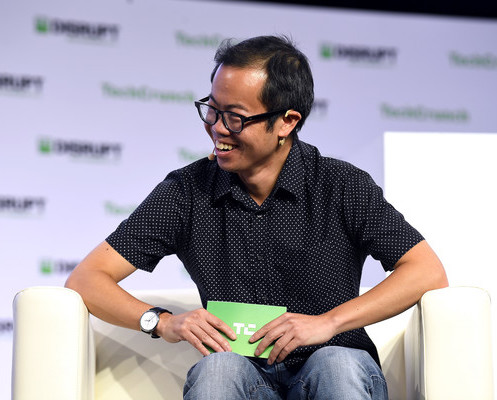
Signal announced Friday that it will restrict users' ability to take screenshots within its secure messaging app on Android and iOS. This move responds to what Signal President Meredith Whittaker describes as an "existential threat" from operating systems integrating agentic AI capabilities that scan screen information.
Whittaker stated that OS-level AI agents capture and store sensitive data, making it accessible to local databases or remote servers, thus undermining Signal's ability to guarantee privacy. Users can disable this setting, but Whittaker warns it would "break our privacy guarantees" and admits it is an "incomplete" solution as other AI agent access methods may exist.
Key facts
- Signal announced restrictions on Friday
- Affects Android and iOS apps
- Users can disable the setting
- Windows app screenshots already blocked by default
Why it matters: This highlights a critical privacy challenge for developers: how to protect application data from being inadvertently exposed to OS-level AI agents. Backend and systems engineers should be aware of data leakage risks through screen-scraping AI and consider platform-specific controls, understanding that current solutions are often incomplete.
The rise of OS-level AI agents presents a new vector for data exfiltration, forcing apps like Signal to implement client-side data protection measures.
Signal Bars Google Gemini and Apple Siri from Accessing Messages by Default
Security · The Register · 2026-11-21

Signal has implemented controls in its iOS and Android apps to block Google Gemini, Apple Siri, and other AI agents from accessing private messages by default. Signal CEO Meredith Whittaker stated that OS AI agents like Gemini Intelligence and Siri AI's Onscreen Awareness can "scan" screen information, capturing Signal data and making it available to these systems.
This measure is similar to screenshot blocking introduced last year to defend against Microsoft Recall. While users can disable this protection, Whittaker warns doing so risks exposing Signal content to AI agents. Signal notes that application developers lack robust tools to prevent AI agents from undermining application-level privacy, and current solutions are partial, as AI agents may have other ways to access data.
Key facts
- Signal updated iOS and Android apps
- Blocks Google Gemini and Apple Siri by default
- Similar to Microsoft Recall screenshot blocking last year
- macOS 27.3 public beta includes new APIs: Device Control and Data Access, Full Disk Access
Why it matters: This highlights a significant challenge for application developers and OS vendors: balancing AI agent utility with user privacy. Developers must actively implement and communicate explicit controls for data access by OS-level AI. Systems engineers should anticipate more granular permission models from OS vendors like Apple (macOS 27.3) to restrict AI agent access to sensitive application data.
The privacy implications of OS-level AI agents require application developers to proactively restrict data access, even if OS controls are currently insufficient.
Google to Shut Down Nest App, Replace Google Assistant on Smart Speakers with Gemini for Home in 2027
Industry · The Verge · 2026-11-20

Google is making changes to its smart home offerings. The Nest app will be shut down on January 25, 2027, with Nest products and subscriptions migrating to the Google Home app. Google will begin deleting Nest account data on March 25, 2027.
Google Assistant on smart speakers and smart displays will be replaced by Gemini for Home on August 2, 2027. Gemini for Home, announced last year, is intended to allow for more complex questions and natural language interaction, replacing Google Assistant which was also phased out on phones earlier this year.
Key facts
- Nest app shutdown: January 25, 2027
- Nest account data deletion begins: March 25, 2027
- Gemini for Home replaces Google Assistant on smart speakers: August 2, 2027
- Google Assistant killed on phones earlier this year
Why it matters: Backend and platform engineers maintaining integrations with Google's smart home ecosystem must prepare for significant API changes and data migration from Nest to Google Home. For AI engineers, the shift from Google Assistant to Gemini for Home indicates a strategic re-platforming, requiring adaptation to new APIs and interaction models for voice assistants in smart home contexts.
Google is consolidating its smart home ecosystem around Google Home and Gemini, requiring developers and users to adapt to a unified platform.
Overview of AI Agents Available via Text Messaging for Personal and Work Tasks
AI Agents & Tooling · TechCrunch · 2026-11-21

Several AI agents are emerging that operate via text messages rather than dedicated apps, allowing users to text them for tasks like scheduling, research, and online shopping. Instinct is a prominent agent, recently valued at $10 billion after a $1 billion funding round.
Other notable options include Ask Proxy, which offers a proactive personal assistant for $1 per day and a work version starting at $15/employee/month. Caddy integrates with iMessage and RCS to organize information from phone content, while Comma is an open-source agent designed for task management across work and daily life, accessible via messaging apps like Signal and Telegram.
Key facts
- Instinct has a $10 billion valuation
- Ask Proxy costs $1 per day (personal)
- Ask Proxy work version starts at $15/employee/month
- Caddy available in public beta since April 2026
- Comma is open source
Why it matters: For AI agent developers, this highlights a growing user preference for agent interaction through existing messaging platforms rather than new apps, suggesting that integration with SMS, iMessage, and RCS is a key consideration for adoption. Engineers building such agents must prioritize robust natural language processing and integration with diverse APIs to fulfill user requests across platforms.
AI agents are increasingly shifting to conversational interfaces within existing messaging apps, simplifying user access but increasing integration complexity.
Quick hits
- Anthropic Mathematician Claims to Have Proved Riemann Hypothesis with Claude AI (The Verge) — Anthropic mathematician Levent Alpöge claims to have proved the Riemann hypothesis, a Millennium Prize problem, with assistance from the Claude AI model, though the solution awaits independent verification.
- Engadget Reviews Apple HomeView, Ray-Ban Meta Gen 3, and Microsoft Surface Laptop Ultra (Engadget) — Engadget reviewed new tech products including the Apple HomeView smart display, Ray-Ban Meta Gen 3 smart glasses, and Microsoft Surface Laptop Ultra, noting varying levels of success.
What to watch
- How quickly other banking institutions will follow Wells Fargo, JPMorgan Chase, and Bank of America in implementing stricter policies against AI agents.
- The ongoing development of OS-level AI agent capabilities and how platforms like Apple, Google, and Microsoft will address developer concerns regarding data access controls and user privacy.
- The independent verification process for Levent Alpöge's claimed proof of the Riemann hypothesis using Claude, and its broader implications for AI's role in scientific and mathematical research.
Sources
- AI-Accelerated Vulnerability Discovery Increases Pressure on IT Teams, Causing Outages — WIRED, 2026-11-21
- Single Malicious Webpage Allowed Researchers to Hijack Meta Muse and Access Private Data — The Hacker News, 2026-11-21
- Banks Implement New Policies, Warnings Against Third-Party AI Agents — WIRED, 2026-11-22
- Signal Restricts Mobile Screenshots to Combat AI Agent Surveillance, Citing 'Existential Threat' — TechCrunch, 2026-11-22
- Signal Bars Google Gemini and Apple Siri from Accessing Messages by Default — The Register, 2026-11-21
- Google to Shut Down Nest App, Replace Google Assistant on Smart Speakers with Gemini for Home in 2027 — The Verge, 2026-11-20
- Overview of AI Agents Available via Text Messaging for Personal and Work Tasks — TechCrunch, 2026-11-21
- Anthropic Mathematician Claims to Have Proved Riemann Hypothesis with Claude AI — The Verge, 2026-11-20
- Engadget Reviews Apple HomeView, Ray-Ban Meta Gen 3, and Microsoft Surface Laptop Ultra — Engadget, 2026-11-21