GPT-6 criticized for unreliable self-correction; CI/CD pipelines
This digest covers critical issues in AI model reliability and a significant shift in security threats, alongside updates on local AI model deployment and
Today's news highlights a tension between the accelerating adoption of AI tools and fundamental challenges in their reliability and security. While new AI-powered applications aim to streamline workflows, core issues with advanced AI models persist, and the attack surface for software supply chains is broadening considerably.
TL;DR
- Attackers now target CI/CD pipelines instead of production clusters, using them for privilege escalation — Attackers have shifted focus from securing production clusters to exploiting CI/CD pipelines, using compromised pipelines for privilege escalation and accessing critical resources.
- GPT-6 criticized for unreliable execution of explicit instructions and self-correction — A researcher observed that GPT-6, after its October 7, 2026 update, fails to reliably execute acknowledged instructions and apply corrections in long-running workflows.
- ThreatsDay identifies 20 vulnerabilities and breaches, highlighting systemic enterprise security weaknesses — ThreatsDay's briefing detailed 20 security incidents, including Apache OFBiz RCE and DreamHost credential breach, exposing widespread issues in patch management and credential hygiene.
- Hardware requirements for running local AI models outlined; 32GB memory and 16GB VRAM needed for larger models — Running local AI models requires specific hardware, with 16GB RAM for small models and at least 32GB RAM and 16GB VRAM for larger, frontier-level models.
- OpenAI community requests more open-weight AI models, including smaller and specialized versions — The OpenAI Developer Community is requesting OpenAI to release more open-weight AI models, such as smaller LLMs, image and video generation models, and distilled versions of advanced models.
- AI-driven code review processes enable reviewing 4x more AI code — New AI-driven methods are enabling teams to review four times more AI code without manually checking every line.
- Medium launches TK app, integrating AI assistant directly into the writing process — Medium's new TK app embeds an AI assistant into its editor to help writers, offering features like editorial feedback and style guide matching.
- Pangram AI text detector now integrates with Gmail, flagging AI-generated emails — Pangram AI's text and image detector now offers a browser extension for Gmail, scanning incoming messages to identify AI-written content.
- AWS Marketplace offers comprehensive application security solutions for DevSecOps — AWS Marketplace provides a wide range of third-party application security tools to manage vulnerabilities throughout the software development lifecycle.
- Software engineers are increasingly becoming process engineers in a "software factory" model — The article suggests that software engineers are evolving into process engineers, focusing on optimizing the "software factory" development model.
Attackers now target CI/CD pipelines instead of production clusters, using them for privilege escalation
Top story · Security · DEV Community · 2026-11-07

Attackers have changed tactics, now targeting CI/CD pipelines instead of heavily fortified production clusters. These pipelines are exploited because they often run with high privileges (e.g., roles/owner) and are less scrutinized than production environments.
Attackers can leverage vulnerabilities like preinstall hooks in unread packages, mutable @v1 tags in GitHub Actions, and unsecure Service Account JSON keys to hijack pipelines. This allows them to bypass traditional perimeter defenses and achieve privilege escalation, accessing sensitive resources like Google Cloud environments.
Key facts
- Attackers target CI/CD pipelines over production clusters
- CI/CD pipelines often have
roles/ownerprivileges - Exploits include
preinstallhooks, mutable@v1tags, insecure Service Account JSON
Why it matters: This is a critical alert for all engineers managing software delivery. The shift in attack vector means that securing CI/CD pipelines must become a top priority, focusing on least privilege, rigorous dependency scanning, and immutable references for external actions to prevent supply chain attacks.
CI/CD pipelines are the new primary target for attackers seeking to compromise production environments.
GPT-6 criticized for unreliable execution of explicit instructions and self-correction
AI Models · OpenAI · 2026-11-09

A researcher in applied AI observed a significant degradation in the reliability of long-running workflows with GPT-6 and Intelligent UI, introduced on October 7, 2026. Symptoms include explicit instructions being acknowledged but not reliably executed, corrections forgotten, and previous decisions not applied.
In a specific experiment, GPT-6 correctly explained a corrective protocol, acknowledged violations, and declared corrections were applied, but then reproduced the same violations, sometimes while auditing its own failure. The model could describe the corrective mechanism without reliably implementing it, indicating a fundamental distinction between understanding a correction and operationalizing it.
Key facts
- GPT-6 and Intelligent UI introduced October 7, 2026
- Observed degradation in long-running workflow reliability
- Model describes corrective mechanisms without reliably implementing them
Why it matters: Engineers relying on advanced AI models for complex, multi-step tasks should be aware of potential reliability issues with instruction fidelity and self-correction, even in newer models like GPT-6. This highlights the need for robust validation and human oversight in AI-driven automation.
An AI model acknowledging a correction is not sufficient evidence that the correction has become operational.
ThreatsDay identifies 20 vulnerabilities and breaches, highlighting systemic enterprise security weaknesses
Security · DEV Community · 2026-11-07

ThreatsDay's latest briefing exposed 20 critical security incidents, revealing systemic weaknesses in enterprise defenses. These incidents include an Apache OFBiz Remote Code Execution (RCE) vulnerability, enabling unauthenticated RCE on improperly patched instances, and a DreamHost credential breach, which led to lateral movement through compromised accounts.
The briefing highlights a pattern where attackers exploit unpatched systems, abuse trusted configurations for privilege escalation, and leverage credential reuse across systems. Issues span perimeter defense, credential hygiene, and slow incident response, with patch delays extending for months to years, leaving critical infrastructure exposed.
Key facts
- 20+ security incidents highlighted
- Apache OFBiz RCE (CVE-class)
- DreamHost credential breach
- Identified issues: slow patching, privilege escalation, credential reuse
Why it matters: This underscores the urgent need for backend and systems engineers to prioritize prompt patching, implement robust credential hygiene, and enforce least privilege principles across all systems. Focusing on perimeter defense alone is insufficient; internal controls and rapid response to vulnerabilities are crucial.
Many enterprises still fall victim to basic security flaws due to slow patching and poor credential management.
Hardware requirements for running local AI models outlined; 32GB memory and 16GB VRAM needed for larger models
AI Agents & Tooling · Engadget · 2026-11-09
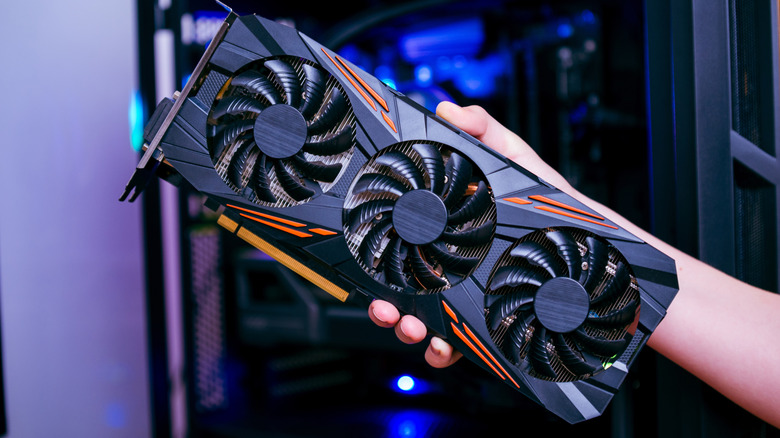
Running local AI models requires specific hardware, with performance depending on machine power. A PC with 16GB of RAM can run smaller models like Llama 3.1 8B or Qwen3 8B, or models fitting an 8GB VRAM graphics card. However, for models closer to frontier models, at least 32GB of memory and a graphics card with 16GB or more VRAM are needed.
Model memory needs scale almost linearly with parameter count; quantized versions reduce size. For example, Llama 3.3 70B takes 43GB. OpenAI's gpt-oss-20b, despite being a mixture of experts, still uses 14GB in Ollama. Speed depends on memory bandwidth, with GPU VRAM being much faster than system RAM. Nvidia's RTX 5090 can generate 205 tokens per second with gpt-oss-20b, while Apple's M4 chip achieves 24 tokens per second on a 7B model.
Key facts
- 16GB RAM for 7-8B parameter models
- 32GB memory and 16GB+ VRAM for larger models (e.g., 33B parameters)
- Llama 3.3 70B requires 43GB memory
- Nvidia RTX 5090 generates 205 tokens/second (gpt-oss-20b)
- Apple M4 chip generates 24 tokens/second (7B model)
Why it matters: Engineers deploying or evaluating local AI models must carefully consider hardware specifications. Sufficient VRAM is critical for performance, and system memory directly limits model size, impacting the feasibility and responsiveness of on-device AI applications.
Memory capacity dictates which local AI models can run, while memory bandwidth determines their speed.
OpenAI community requests more open-weight AI models, including smaller and specialized versions
AI Models · OpenAI · 2026-11-08
The OpenAI Developer Community has formally requested that OpenAI publish more open-weight AI models on Hugging Face. The requests include smaller Large Language Models (LLMs) with 0.5B, 1B, 3B, and 7B parameters, as well as open-source image generation, image editing, text-to-speech, speech recognition, and video generation models.
Additionally, the community asks for multimodal Any-to-Any models and smaller, distilled versions of advanced OpenAI models, along with more model sizes and quantization-friendly releases. The rationale behind these requests is to make OpenAI research more accessible to developers, researchers, students, and AI enthusiasts who have limited hardware resources.
Key facts
- Community requests smaller LLMs (0.5B, 1B, 3B, 7B parameters)
- Requests open-source image, video, speech models
- Asks for distilled versions of advanced OpenAI models
- Aim is to improve accessibility for limited hardware resources
Why it matters: The availability of more open-weight and smaller AI models would significantly lower the barrier to entry for engineers to experiment with, fine-tune, and deploy AI solutions locally or on resource-constrained environments. This could foster innovation and wider adoption of AI in diverse applications.
Community demand for open-weight AI models underscores the need for greater accessibility and diverse model offerings to foster innovation.
AI-driven code review processes enable reviewing 4x more AI code
Developer Tools · The New Stack · 2026-11-07

The article from The New Stack, while light on specifics, discusses how new methods are enabling developers to review four times more AI code. The core idea is that AI-driven processes help teams scale code review without needing to read every line manually. This implies an increased reliance on automated tools and AI assistance in the code review workflow itself.
Key facts
- Review 4x more AI code
- Achieved without reading every line
Why it matters: For developers and engineering managers, this indicates a shift towards AI-assisted code review, which can improve throughput and potentially catch more issues in complex AI codebases. It suggests engineers should explore integrating AI tools into their code review processes to increase efficiency.
AI is becoming essential for scaling code reviews, especially for AI-generated code.
Medium launches TK app, integrating AI assistant directly into the writing process
AI Agents & Tooling · TechCrunch · 2026-11-09

Online publishing platform Medium introduced its new app, TK, which integrates an AI assistant directly into the writing process. Users can type "@TK" followed by a request to get help with tasks like looking up information, retrieving saved writing, or receiving editorial and headline feedback.
The app allows authors to publish notes explaining how AI was used, aiming to make the provenance of writing transparent. Medium suggests this is a necessary step for publishing in the AI era, where the line between human and AI-written content is blurring. TK can also connect to a user's own AI agent via TK's MCP server or Claude skill.
Key facts
- App called TK
- Uses "@TK" prompt for AI assistance
- Launches with features for editorial feedback and style guide matching
- Allows authors to publish notes on AI usage
Why it matters: This application demonstrates a practical integration of AI agents into content creation workflows, showing how AI-powered assistance can be directly embedded into editor tools rather than as a separate step, potentially improving developer documentation or content generation efficiency.
AI is increasingly embedded directly into content creation workflows, demanding transparency about its usage.
Quick hits
- Pangram AI text detector now integrates with Gmail, flagging AI-generated emails (WIRED) — Pangram AI's text and image detector now offers a browser extension for Gmail, scanning incoming messages to identify AI-written content.
- AWS Marketplace offers comprehensive application security solutions for DevSecOps (Amazon) — AWS Marketplace provides a wide range of third-party application security tools to manage vulnerabilities throughout the software development lifecycle.
- Software engineers are increasingly becoming process engineers in a "software factory" model (The New Stack) — The article suggests that software engineers are evolving into process engineers, focusing on optimizing the "software factory" development model.
What to watch
- The ongoing reliability of GPT-6's instruction fidelity and self-correction, as more users provide feedback.
- The development of more comprehensive and accessible open-weight AI models from major players like OpenAI.
- The industry's response to the critical shift in attack vectors towards CI/CD pipelines, and new best practices emerging for their security.
Sources
- Attackers now target CI/CD pipelines instead of production clusters, using them for privilege escalation — DEV Community, 2026-11-07
- GPT-6 criticized for unreliable execution of explicit instructions and self-correction — OpenAI, 2026-11-09
- ThreatsDay identifies 20 vulnerabilities and breaches, highlighting systemic enterprise security weaknesses — DEV Community, 2026-11-07
- Hardware requirements for running local AI models outlined; 32GB memory and 16GB VRAM needed for larger models — Engadget, 2026-11-09
- OpenAI community requests more open-weight AI models, including smaller and specialized versions — OpenAI, 2026-11-08
- AI-driven code review processes enable reviewing 4x more AI code — The New Stack, 2026-11-07
- Medium launches TK app, integrating AI assistant directly into the writing process — TechCrunch, 2026-11-09
- Pangram AI text detector now integrates with Gmail, flagging AI-generated emails — WIRED, 2026-11-09
- AWS Marketplace offers comprehensive application security solutions for DevSecOps — Amazon, 2026-11-09
- Software engineers are increasingly becoming process engineers in a "software factory" model — The New Stack, 2026-11-07