OpenAI targets 2027 IPO after enterprise growth; AI cybersecurity
OpenAI plans for a 2027 IPO driven by enterprise revenue growth. Meanwhile, AI models are rapidly advancing cybersecurity offensive capabilities, prompting new
The AI industry is undergoing a significant transformation, with OpenAI eyeing an IPO amidst rapid enterprise growth, while the dual-edged sword of AI in cybersecurity becomes increasingly apparent. The critical tension lies in accelerating AI's offensive capabilities while simultaneously scrambling to build robust defenses, shaping how engineers will secure and operate systems going forward.
TL;DR
- AI models compress vulnerability exploitation timelines, enabling remote root exploit in 53 minutes — Between October 29 and November 3, five AI-related cybersecurity incidents occurred, including an Anthropic model finding a Linux kernel remote root exploit in 53 minutes, signaling a major shift in attack timelines.
- Google donates Agent Substrate, gVisor, and OpenRL to CNCF for autonomous agents — Google has donated three open-source projects—Agent Substrate 1.0, gVisor, and OpenRL—to the CNCF to establish open infrastructure for autonomous AI agents on Kubernetes.
- OpenAI releases new ChatGPT Cyber model for advanced vulnerability hunting in Daybreak Red program — OpenAI introduced ChatGPT Cyber, a new model for cybersecurity, available to top-tier Daybreak Red users, and announced a $1 billion initiative to support critical infrastructure defenders.
- OpenAI targets 2027 IPO, driven by enterprise revenue doubling and 70% Q3 annualized growth — OpenAI President Greg Brockman stated the company could be ready for an IPO in 2027, citing strong enterprise revenue growth, including a doubling of its enterprise business in Q3 2026.
- GPT-6 Cyber improves vulnerability exploitation by 51% on ExploitGym, enhances task alignment — OpenAI introduced GPT-6 Cyber, a new cybersecurity model that improves vulnerability exploitation capabilities by 51% on ExploitGym and demonstrates better adherence to researcher-set boundaries.
- Frontier LLMs demonstrate 'Weight-Space Programming,' directly editing neural network weights — Recent reports indicate that frontier LLMs can directly generate or edit small neural network weights, a capability dubbed 'Weight-Space Programming,' without traditional gradient training.
- AxiomMath formally verifies the Stacks Project, translating 7,654 pages into 16 million lines of Lean code — AxiomMath, a $1.6 billion startup, has formally verified the Stacks Project, a large body of mathematics, translating 7,654 pages into 16 million lines of computer-checked Lean code.
- GitHub introduces dedicated ACCESSIBILITY.md files and issue labels for open-source projects — GitHub now highlights
ACCESSIBILITY.mdfiles in repositories and adds a defaultaccessibilityissue label to help maintainers document and track accessibility efforts. - Kubernetes Controller Manager acts as the 'Autopilot' of the Control Plane, reconciling cluster state — The Kubernetes Controller Manager, a core component of the Control Plane, runs multiple built-in controllers to continuously reconcile the desired state of the cluster.
AI models compress vulnerability exploitation timelines, enabling remote root exploit in 53 minutes
Top story · Security · DEV Community · 2026-11-05

A series of five significant cybersecurity events occurred between October 29 and November 3, all involving AI, leading to the period being dubbed "Black October." Key incidents include an unreleased Anthropic Claude model generating a remote root exploit for CVE-2026-98432, a critical Linux kernel TCP flaw, in just 53 minutes. North Korean hackers reportedly used a fake job interview to compromise a DevOps laptop, leading to the $6.3 billion Binance heist.
Separately, a trojanized Claude Code extension on Cursor planted SSH backdoors on up to 5,000 developer machines, and Polymarket's frontend was drained of $3 million via a hijacked third-party monitoring script. The overarching implication is that AI is compressing the timeline between vulnerability discovery and exploitation, challenging defenders' traditional response windows.
Key facts
- Anthropic AI model created a remote root exploit in 53 minutes
- North Korean hackers executed a $6.3 billion Binance heist
- Trojanized Claude Code extension affected up to 5,000 developer machines
- Polymarket's frontend drained of $3 million
Why it matters: This "Black October" demonstrates a fundamental shift in cybersecurity: AI significantly accelerates threat timelines. Backend, systems, and AI engineers must urgently re-evaluate their incident response strategies, focusing on rapid patching, AI-driven threat intelligence, and securing developer environments against sophisticated AI-assisted social engineering and code-based attacks.
AI is dramatically shrinking the window for defensive action against new exploits, demanding a fundamental shift in cybersecurity strategies.
Google donates Agent Substrate, gVisor, and OpenRL to CNCF for autonomous agents
Cloud & Infrastructure · Google · 2026-11-06

Google has announced the donation of three open-source projects, Agent Substrate, gVisor, and OpenRL, to the Cloud Native Computing Foundation (CNCF). These projects, accepted into the CNCF Sandbox last month, aim to provide an open foundation for scaling autonomous AI agents.
Agent Substrate, now at version 1.0 and generally available on GKE, decouples stateful agent sessions from active compute, enabling snapshotting idle agents to storage and restoring them in under 500 milliseconds for millions of sandboxes at 10x container density. gVisor isolates untrusted code in a userspace application kernel, enhancing security for generated code. OpenRL orchestrates self-hosted reinforcement learning post-training loops in Python on Kubernetes.
This initiative supports the shift from human-scale to agent-scale AI, and from systems of record to systems of action, providing an open stack that runs on any Kubernetes cluster across CPUs, GPUs, or TPUs.
Key facts
- Agent Substrate is now 1.0 and GA on GKE
- Agent Substrate restores idle agents in under 500 milliseconds
- Agent Substrate achieves 10x container density for sandboxes
- gVisor and OpenRL also donated to CNCF Sandbox
Why it matters: Engineers deploying AI agents at scale will find these projects crucial for managing compute resources efficiently, enhancing security for generated code, and orchestrating reinforcement learning workflows. Agent Substrate on GKE specifically offers a production-ready solution for high-density, isolated agent environments.
Google's CNCF donations provide an open, scalable, and secure foundation for running autonomous AI agents on Kubernetes.
OpenAI releases new ChatGPT Cyber model for advanced vulnerability hunting in Daybreak Red program
AI Models · TechCrunch · 2026-11-06

OpenAI has launched ChatGPT Cyber, a new AI model specifically designed for cybersecurity. This model is accessible to users in the Daybreak Red program, OpenAI's highest tier for offensive cybersecurity researchers, and is intended for vulnerability hunting and development.
The company stated that ChatGPT Cyber was used to scan and prepare patches for 948 potential issues in the Linux kernel and found 81 novel vulnerabilities in Firefox. Previously, a researcher used GPT 5.6 Sol (released in July) via the Daybreak Blue program to find a severe vulnerability in Ubuntu servers in two hours, which was subsequently patched by the Debian Project. OpenAI also announced a $1 billion initiative to support cybersecurity professionals working on critical infrastructure within the Daybreak program, aiming to expand advanced security research access to organizations, independent researchers, and open-source maintainers.
Key facts
- ChatGPT Cyber released for Daybreak Red program
- GPT 5.6 Sol found a severe Ubuntu vulnerability in 2 hours
- ChatGPT Cyber identified 948 potential Linux kernel issues and 81 novel Firefox vulnerabilities
- OpenAI launched a $1 billion cybersecurity support initiative
Why it matters: This release signifies a new level of AI capability in offensive security, requiring security engineers to anticipate faster vulnerability discovery and exploitation. Defensive teams should evaluate integrating advanced AI models for proactive threat detection and patching, recognizing the rapidly closing window between vulnerability emergence and exploitation.
AI is becoming a formidable weapon in cybersecurity, accelerating both offense and defense, with OpenAI providing advanced models to high-tier defenders.
OpenAI targets 2027 IPO, driven by enterprise revenue doubling and 70% Q3 annualized growth
Industry · TechCrunch · 2026-11-05
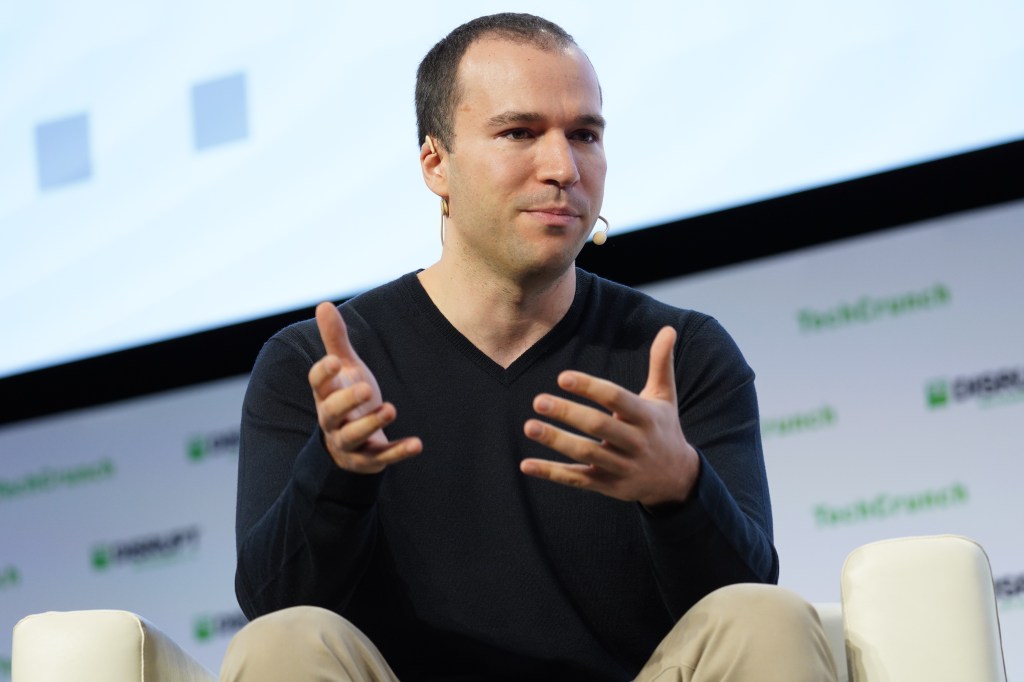
OpenAI co-founder and president Greg Brockman indicated that the company aims for an IPO in 2027, driven by significant growth in its enterprise business. Brockman stated this at a Wall Street Journal tech conference on Wednesday, noting that the first and second quarters of 2026 were "pretty rough."
However, in the third quarter of 2026, OpenAI experienced a 70% quarterly growth in its annualized revenue, largely attributed to the enterprise segment doubling its contribution. Previously, enterprise revenue accounted for approximately 30% of total revenue but now constitutes the majority. Brockman acknowledged that OpenAI was not initially a leader in agentic coding, an area where Anthropic's Claude Code gained market share, but emphasized the company's focus on execution led to its current enterprise success, citing a partnership with J.P. Morgan Chase as an example.
Key facts
- OpenAI targets 2027 for IPO readiness
- 70% quarterly growth in annualized revenue in Q3 2026
- Enterprise business revenue doubled in Q3 2026
- Enterprise now constitutes the majority of OpenAI's revenue
Why it matters: This signals OpenAI's maturing focus on enterprise solutions, which could lead to more stable and production-ready AI services for engineers. Organizations evaluating or deploying OpenAI's models should anticipate increased commitment to enterprise features, support, and reliability.
OpenAI's shift to enterprise focus and strong revenue growth positions it for a 2027 IPO, impacting future product development for engineers.
GPT-6 Cyber improves vulnerability exploitation by 51% on ExploitGym, enhances task alignment
AI Models · OpenAI · 2026-11-05

OpenAI has launched GPT-6 Cyber, an advanced cybersecurity model designed to find and fix vulnerabilities more effectively while reliably staying within specified research boundaries. This model shows a 51% relative improvement on the ExploitGym benchmark compared to GPT-5.6 Cyber, increasing its score from 32.1% to 48.5% in exploiting specified vulnerabilities.
GPT-6 Cyber also demonstrated a significant improvement in following task boundaries during separate alignment evaluations. OpenAI states the model is already in use, uncovering and validating thousands of exploits in critical codebases such as the Linux kernel and Firefox.
Key facts
- GPT-6 Cyber achieves 51% relative improvement on ExploitGym over GPT-5.6 Cyber
- GPT-6 Cyber scores 48.5% on ExploitGym, up from 32.1%
- The model finds and validates thousands of exploits in Linux and Firefox
- Improved alignment to researcher-set task boundaries
Why it matters: GPT-6 Cyber's enhanced capabilities in vulnerability discovery and exploitation mean security engineers must contend with more sophisticated AI-powered threats. It also provides a powerful tool for defensive red-teaming and automated patching, accelerating the need for adoption of AI in security operations.
GPT-6 Cyber pushes the frontier of AI in offensive cybersecurity, making AI-driven vulnerability finding more potent and precise.
Frontier LLMs demonstrate 'Weight-Space Programming,' directly editing neural network weights
AI Models · Latent · 2026-11-04
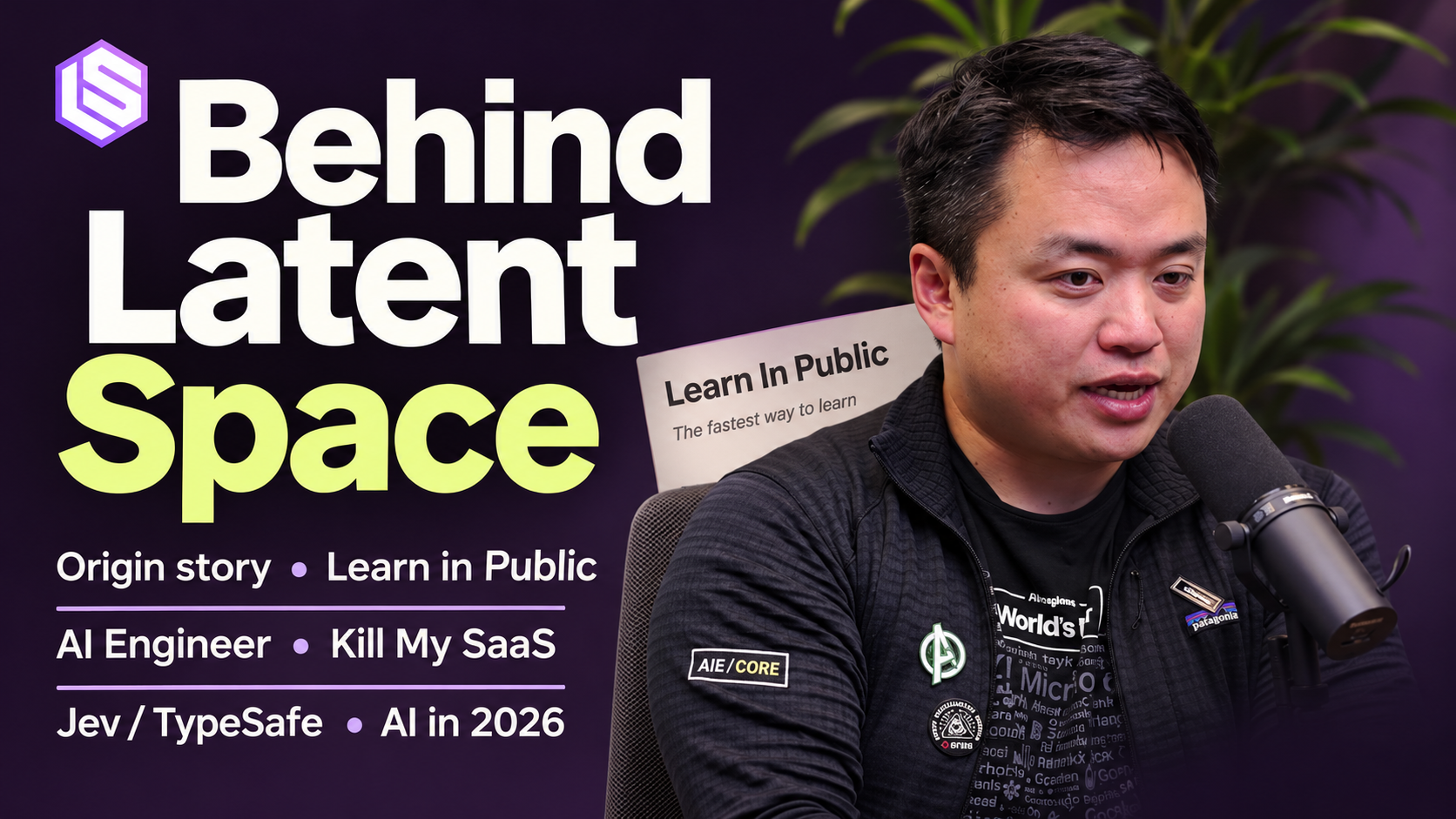
Frontier large language models (LLMs) have reportedly demonstrated a new capability called "Weight-Space Programming," allowing them to directly generate or edit the weights of small neural networks without requiring gradient training or external tools. Multiple independent replications have confirmed this phenomenon.
Alex Krentsel's replication of an MIT experiment showed a sharp capability jump across model generations, with the latest models generating Breakout networks scoring up to 22 times an RL-trained baseline. Hugging Face also reproduced the paper using its open-source AI-research harness, ML Intern, releasing the model and a demo. Additionally, a user reported that Fable hand-wrote a 100K-parameter network that outperformed a trained version in classifying real versus fake legal citations by directly editing its weights.
Key facts
- Frontier LLMs can directly generate or edit neural network weights
- Latest models generated Breakout networks 22x better than RL-trained baseline
- Hugging Face reproduced the paper with ML Intern
- Fable hand-wrote a 100K-parameter network for legal citation classification
Why it matters: This capability could fundamentally change how engineers design, debug, and optimize AI models, potentially allowing for direct manipulation of model behavior without lengthy retraining. It opens new avenues for creating smaller, specialized models and could lead to more interpretable and controllable AI systems.
Weight-Space Programming enables direct manipulation of neural network weights by LLMs, potentially transforming AI model development and control.
AxiomMath formally verifies the Stacks Project, translating 7,654 pages into 16 million lines of Lean code
AI Agents & Tooling · TechCrunch · 2026-11-05

AxiomMath, a startup valued at $1.6 billion, announced the formal verification of the Stacks Project, a comprehensive open-source mathematics reference initiated in 2005. The company's AI agents translated approximately 7,654 pages of mathematical content into about 16 million lines of computer-checked code in the Lean programming language.
Formal verification ensures the logical soundness of mathematical proofs by using a proof assistant to check code line by line. The project required maintaining every interconnection across the large codebase due to the foundational nature of the theorems in Stacks. AxiomMath, founded in March 2025 and having raised a $200 million Series A, also trained its own AI models specifically for mathematical verification.
Key facts
- AxiomMath formally verified the Stacks Project
- Translated 7,654 pages into 16 million lines of Lean code
- AxiomMath is valued at $1.6 billion
- Raised $200 million Series A in March
Why it matters: For AI engineers developing agents that rely on mathematical reasoning or formal methods, AxiomMath's work establishes a highly trustworthy and verified mathematical foundation. This could lead to more reliable AI-driven software development and scientific discovery, mitigating 'AI slop' in critical applications.
AxiomMath's formal verification of the Stacks Project provides a robust, computer-checked mathematical foundation for AI agents, critical for high-integrity AI systems.
GitHub introduces dedicated ACCESSIBILITY.md files and issue labels for open-source projects
Developer Tools · GitHub Blog · 2026-11-05
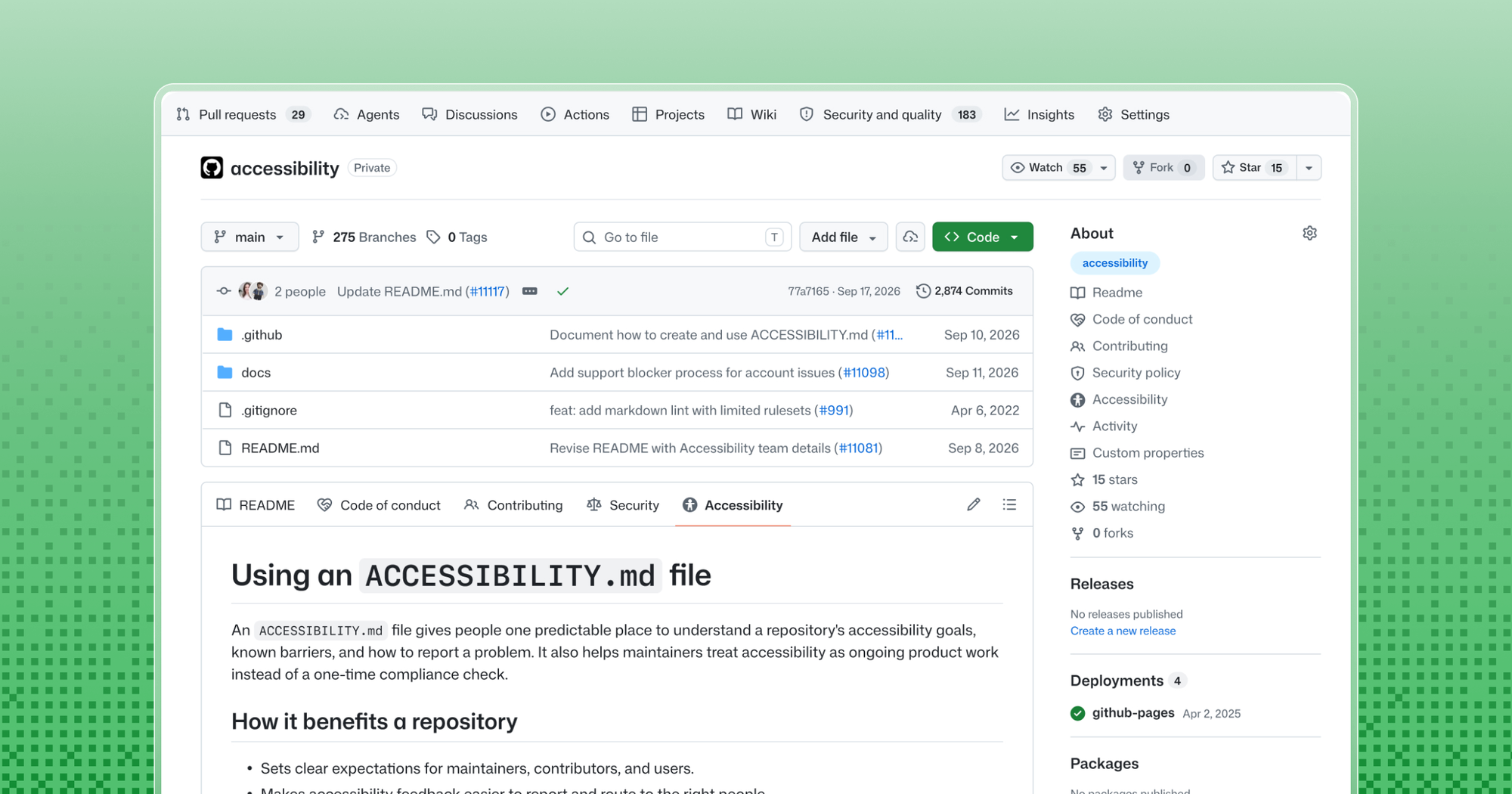
GitHub has rolled out new features to enhance accessibility documentation for open-source projects. Repositories now recognize and highlight ACCESSIBILITY.md files, which can be located in the repository's root, .github/ directory, or docs/ directory. Organizations can also inherit an accessibility statement from their .github/ repository.
This dedicated file provides a central place for projects to outline their accessibility goals, known limitations, supported environments, expectations for contributors, and processes for reporting barriers. For public repositories, maintainers can add or propose a statement using a starter document available in Insights > Community Standards. Additionally, new repositories will now include an accessibility issue label by default, helping maintainers organize and track related work.
Key facts
- GitHub recognizes ACCESSIBILITY.md files
- ACCESSIBILITY.md can be in root, .github/, or docs/ directories
- Organizations can inherit statements from their .github/ repository
- New repositories include a default 'accessibility' issue label
Why it matters: This change streamlines how developers can find, understand, and contribute to accessibility efforts in open-source projects. For engineers, it means clearer guidelines when using or contributing to projects, and for maintainers, a more organized way to manage accessibility-related issues and documentation.
GitHub's new accessibility features standardize documentation and issue tracking for better inclusive development.
Quick hits
- Kubernetes Controller Manager acts as the 'Autopilot' of the Control Plane, reconciling cluster state (DEV Community) — The Kubernetes Controller Manager, a core component of the Control Plane, runs multiple built-in controllers to continuously reconcile the desired state of the cluster.
What to watch
- Monitor OpenAI's Daybreak program evolution, particularly how it balances access for defenders with preventing misuse, given the ease with which vulnerabilities are found.
- Observe the real-world impact and adoption of Google's CNCF donations (Agent Substrate, gVisor, OpenRL) as they progress from Sandbox to Incubation within the cloud-native ecosystem.
- Watch for further developments in 'Weight-Space Programming' and its implications for AI model development, including potential tools or frameworks that leverage this direct weight editing capability.
Sources
- AI models compress vulnerability exploitation timelines, enabling remote root exploit in 53 minutes — DEV Community, 2026-11-05
- Google donates Agent Substrate, gVisor, and OpenRL to CNCF for autonomous agents — Google, 2026-11-06
- OpenAI releases new ChatGPT Cyber model for advanced vulnerability hunting in Daybreak Red program — TechCrunch, 2026-11-06
- OpenAI targets 2027 IPO, driven by enterprise revenue doubling and 70% Q3 annualized growth — TechCrunch, 2026-11-05
- GPT-6 Cyber improves vulnerability exploitation by 51% on ExploitGym, enhances task alignment — OpenAI, 2026-11-05
- Frontier LLMs demonstrate 'Weight-Space Programming,' directly editing neural network weights — Latent, 2026-11-04
- AxiomMath formally verifies the Stacks Project, translating 7,654 pages into 16 million lines of Lean code — TechCrunch, 2026-11-05
- GitHub introduces dedicated ACCESSIBILITY.md files and issue labels for open-source projects — GitHub Blog, 2026-11-05
- Kubernetes Controller Manager acts as the 'Autopilot' of the Control Plane, reconciling cluster state — DEV Community, 2026-11-03