Mistral Releases Le Chonk, Kubernetes Embraces AI Conformance
Mistral open-sources its latest AI model 'Le Chonk'. Kubernetes launches AI Conformance as a SIG Architecture subproject to standardize AI workloads.
This week's news highlights the continued push towards open AI models and the increasing integration of AI into developer workflows and infrastructure. The standardization of AI workloads on Kubernetes and the surge in developer activity driven by AI agents are key indicators of this trend.
TL;DR
- GitHub Octoverse 2026 Reports Record Developer Activity Driven by AI Agents — GitHub reports 17.9 billion code pushes in the past year, exceeding 2024 and 2025 combined, with AI agents driving a significant increase in developer activity and pull request initiation.
- Mistral Releases Open Weights for Mistral Large 4 'Le Chonk' AI Model — Mistral has released open weights for its 'Le Chonk' AI model, which is part of the Mistral Large 4 series, enabling sovereign control for companies.
- Kubernetes AI Conformance Moves from Working Group to SIG Architecture Subproject — Kubernetes AI Conformance has transitioned from a working group to a subproject under SIG Architecture to standardize AI workloads and prevent ecosystem fragmentation.
- OpenAI Seeks Traffic Infrastructure Engineers to Scale Cloud Network — OpenAI is hiring Software Engineers for their Traffic Infrastructure team to build and operate networking across clouds and regions for products like ChatGPT and the API.
- Kubernetes Platforms Face Redundant Layer Building, Suggests Common Solution — Kubernetes platforms frequently rebuild a common layer that could be shared, leading to redundant engineering efforts.
- Entire Co-founder Thomas Dohmke Shares Concerns About Tech's Future — Entire co-founder Thomas Dohmke expressed worries about the future of technology, though specific concerns were not detailed in the provided content.
- The 'Pain in the Ass' Math That Could Save Vibe Coding From Itself — An article discusses how complex mathematics might address fundamental issues within 'Vibe Coding', without detailing the specifics of either.
GitHub Octoverse 2026 Reports Record Developer Activity Driven by AI Agents
Top story · AI Agents & Tooling · GitHub Blog · 2026-10-28
Developers pushed code to GitHub 17.9 billion times in the last 12 months, surpassing the combined totals for 2024 and 2025. This growth accelerated sharply during the year as AI agents became more widely adopted.
Repositories with an agent configuration file saw eight times more commits than new repositories without one. As of September, over 40% of pull requests were started with an agent, a significant increase from 17% in March. Developers are also rapidly changing their model choices, with 61% of GitHub Copilot users in September using more than one model, distributing requests across general purpose, deep reasoning and planning, and fast and lightweight models.
New industries like mining, construction, health care, and agriculture have seen their public repositories grow several times over since 2022.
Key facts
- 17.9 billion code pushes in last 12 months
- 40%+ pull requests started with agents as of September (up from 17% in March)
- 61% of GitHub Copilot users used multiple models in September
- Average repo with agent config logged 8x more commits
Why it matters: Engineers should increasingly incorporate AI agents into their development workflows, as they are demonstrably boosting productivity and changing how code is initiated and reviewed. Exploring multiple AI models for different tasks can further optimize this integration.
AI agents are fundamentally changing developer workflows, leading to unprecedented levels of code activity and shifting the focus towards agent-assisted initiation and human review.
Mistral Releases Open Weights for Mistral Large 4 'Le Chonk' AI Model
AI Models · Siliconangle · 2026-10-29
Mistral has made the open weights available for its new 'Le Chonk' AI model. This model belongs to the Mistral Large 4 series.
The release aims to provide sovereign control over the AI model for companies, indicating a move towards greater user autonomy and customization in AI deployment.
Key facts
- Model: Le Chonk
- Series: Mistral Large 4
Why it matters: The open-weight release allows engineers to deploy and fine-tune a powerful Mistral model on their own infrastructure, offering greater control, privacy, and potentially lower operational costs compared to API-based models.
Mistral's open-weight release of 'Le Chonk' empowers organizations with sovereign control over their AI deployments.
Kubernetes AI Conformance Moves from Working Group to SIG Architecture Subproject
Cloud & Infrastructure · Kubernetes · 2026-10-29
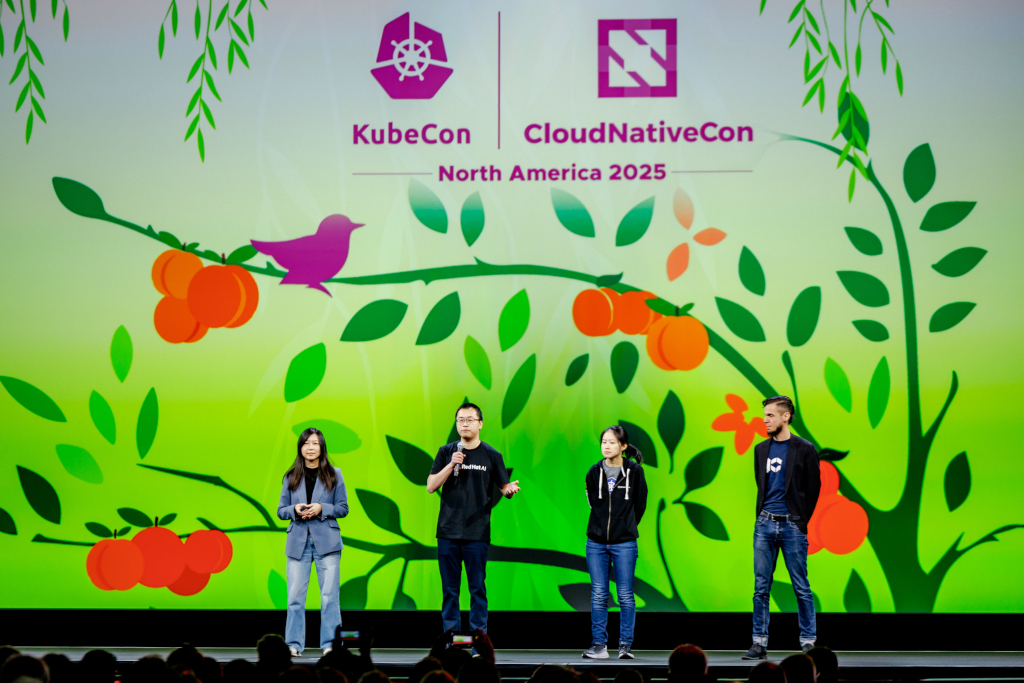
The Kubernetes AI Conformance initiative has been integrated into SIG Architecture as a subproject, having originated as a CNCF Program and then a Working Group.
Janet Kuo (Google) and Yuan Tang (Red Hat) co-lead this effort. The program was initiated to address the varied ways vendors were building infrastructure stacks for AI on Kubernetes, aiming to prevent fragmentation within the ecosystem. The Gateway AI Inference Extension was one of the early initiatives that gained traction, demonstrating community interest in including inference-related requirements.
The motivation is to standardize how AI workloads run on Kubernetes, ensuring it remains a leading platform for next-generation workloads.
Key facts
- Led by: Janet Kuo (Google), Yuan Tang (Red Hat)
- Previous status: CNCF Program, Working Group
- Current status: SIG Architecture subproject
Why it matters: This standardization means engineers can expect more consistent and portable deployments of AI workloads across different Kubernetes environments, reducing integration complexities and improving reliability.
Kubernetes AI Conformance standardizes AI workloads, making them more consistent and portable across platforms.
OpenAI Seeks Traffic Infrastructure Engineers to Scale Cloud Network
Cloud & Infrastructure · OpenAI · 2026-10-29
OpenAI's Cloud Infrastructure team is responsible for the infrastructure supporting products such as ChatGPT and the API. The Traffic team within this group manages all aspects of traffic flow, including ingress, egress, and inter-service communication across clusters, regions, and external dependencies.
The role involves designing, building, and operating networking and traffic infrastructure, spanning L3, L4, and L7. Projects include developing gateways, control planes, improving cross-region connectivity, and diagnosing performance issues. Engineers will also build telemetry and diagnostic tools, partner with Security for traffic-path protections, and improve latency, throughput, and availability.
Key facts
- Team: Cloud Infrastructure, Traffic team
- Focus: L3, L4, L7 networking
- Products: ChatGPT, API
Why it matters: This role indicates OpenAI's ongoing scaling challenges and investment in robust, secure, and efficient multi-cloud networking for its AI services. Engineers focused on distributed systems and cloud networking can learn from their approach to handling large-scale AI traffic.
OpenAI is heavily investing in traffic infrastructure engineers to scale its AI products across diverse cloud environments.
Kubernetes Platforms Face Redundant Layer Building, Suggests Common Solution
Cloud & Infrastructure · The New Stack · 2026-10-29

Many Kubernetes platforms are observed to be repeatedly developing a specific infrastructure layer that could potentially be standardized and shared. This redundancy implies inefficiencies in current platform engineering practices within the Kubernetes ecosystem.
Why it matters: Engineers building platform-on-Kubernetes should identify and contribute to common, shareable components to avoid redundant work, improve maintainability, and foster a more collaborative ecosystem.
Standardization efforts for Kubernetes platform layers could reduce redundant development.
Entire Co-founder Thomas Dohmke Shares Concerns About Tech's Future
Industry · The New Stack · 2026-10-31

Thomas Dohmke, co-founder of Entire, has voiced concerns regarding the future trajectory of the tech industry. The article mentions this without elaborating on the specific worries or challenges he identified.
Key facts
- Speaker: Thomas Dohmke
- Affiliation: Entire co-founder
Why it matters: This article highlights general industry sentiment rather than specific engineering concerns or changes, so there is no direct practical impact for engineers this week.
A tech industry co-founder expresses general concerns about the future of technology.
The 'Pain in the Ass' Math That Could Save Vibe Coding From Itself
Security · WIRED · 2026-10-29
The article references a complex mathematical approach as a potential solution for inherent problems within something termed 'Vibe Coding'. However, the content does not provide details on what 'Vibe Coding' entails or the specific mathematical concepts involved.
Why it matters: This article is too vague to offer any practical engineering insights or actions. It mentions a concept without sufficient detail for analysis or application.
Vague mathematical solutions are proposed for an undefined 'Vibe Coding' problem.
What to watch
- Observe how the Kubernetes AI Conformance initiative develops concrete specifications and tools, and its adoption rate by various vendors.
- Monitor how the increased use of AI agents impacts code quality and maintenance, and if new tools or practices emerge to manage agent-generated code.
- Track the performance and adoption of Mistral's 'Le Chonk' model, especially in enterprise environments due to its open weights.
Sources
- GitHub Octoverse 2026 Reports Record Developer Activity Driven by AI Agents — GitHub Blog, 2026-10-28
- Mistral Releases Open Weights for Mistral Large 4 'Le Chonk' AI Model — Siliconangle, 2026-10-29
- Kubernetes AI Conformance Moves from Working Group to SIG Architecture Subproject — Kubernetes, 2026-10-29
- OpenAI Seeks Traffic Infrastructure Engineers to Scale Cloud Network — OpenAI, 2026-10-29
- Kubernetes Platforms Face Redundant Layer Building, Suggests Common Solution — The New Stack, 2026-10-29
- Entire Co-founder Thomas Dohmke Shares Concerns About Tech's Future — The New Stack, 2026-10-31
- The 'Pain in the Ass' Math That Could Save Vibe Coding From Itself — WIRED, 2026-10-29